

Grab Bar Placement 101: Where, Why, and How to Install Them Without Ruining Your Bathroom's Look
When most people hear the phrase "grab bar," they picture a stainless steel rail bolted to the wall of a hospital bathroom.
That's unfortunate, because grab bars are one of the most effective safety features you can add to a home, and they don't have to look institutional.
A properly installed grab bar can reduce the risk of falls, make daily tasks easier, and provide confidence for years to come. The challenge isn't deciding whether you need grab bars. It's figuring out where they belong, how they should be installed, and how to make them blend into a beautiful bathroom.
Whether you're planning a remodel, helping a loved one age in place, or simply thinking ahead, here's what you need to know.
Why Grab Bars Matter
Bathrooms are one of the most dangerous rooms in the house. Water, soap, smooth surfaces, and awkward movements create the perfect conditions for slips and falls. Tasks like stepping into a shower, standing up from a toilet, or balancing on one foot while drying off become more difficult as we age.
25% of people over age 65 will fall each year. Many of these falls could be prevented with the steadiness provided by grab bars. The best time to install grab bars is before they're urgently needed.
Grab Bar Placement: The Three Most Important Locations
While every bathroom is different, there are three areas where grab bars provide the greatest benefit.
1. Inside the Shower
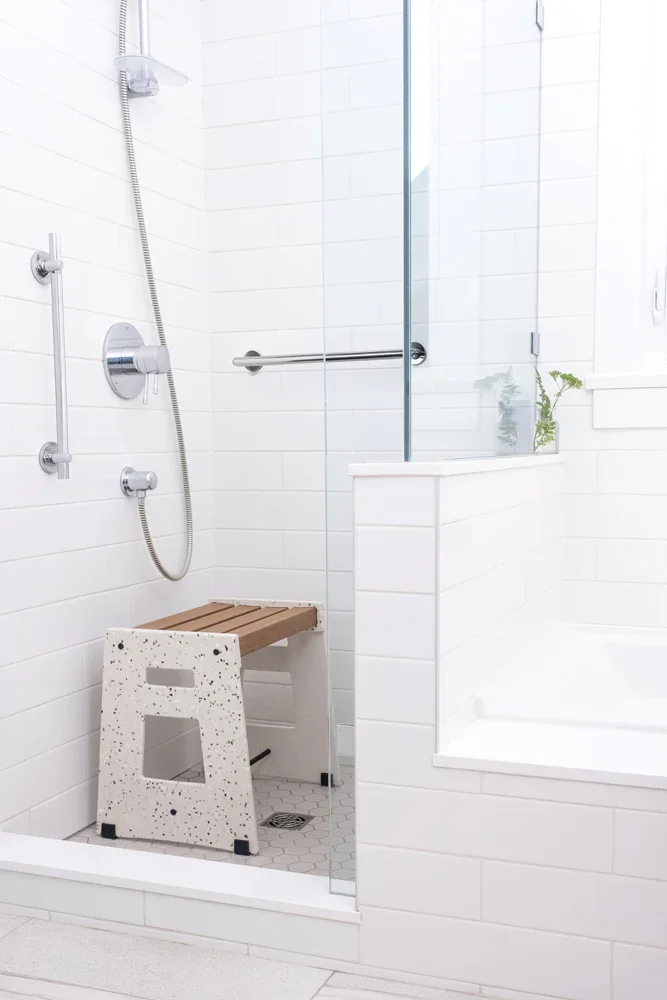
Capella Designs Shower seat inside a shower with well place grab bars.
The shower is usually the highest-priority location. Standing on a wet surface while turning, reaching, and washing creates multiple opportunities for slips.
A vertical grab bar near the shower entrance helps with stepping in and out safely.
A horizontal grab bar along the side wall provides support while standing and moving around inside the shower.
If the shower includes a bench or seat, another bar near the seating area can help with transitions between sitting and standing.
Many occupational therapists consider a combination of vertical and horizontal bars to be the most versatile setup.
2. Next to the Toilet
Getting on and off the toilet is essentially a squat. As leg strength decreases, this movement becomes one of the most challenging daily activities.
A grab bar mounted beside the toilet provides leverage when sitting down and standing up. In larger bathrooms, a second bar on the adjacent wall can create even more support.
If you're remodeling, this is also a good time to consider a comfort-height toilet, which reduces the distance someone must lower themselves.
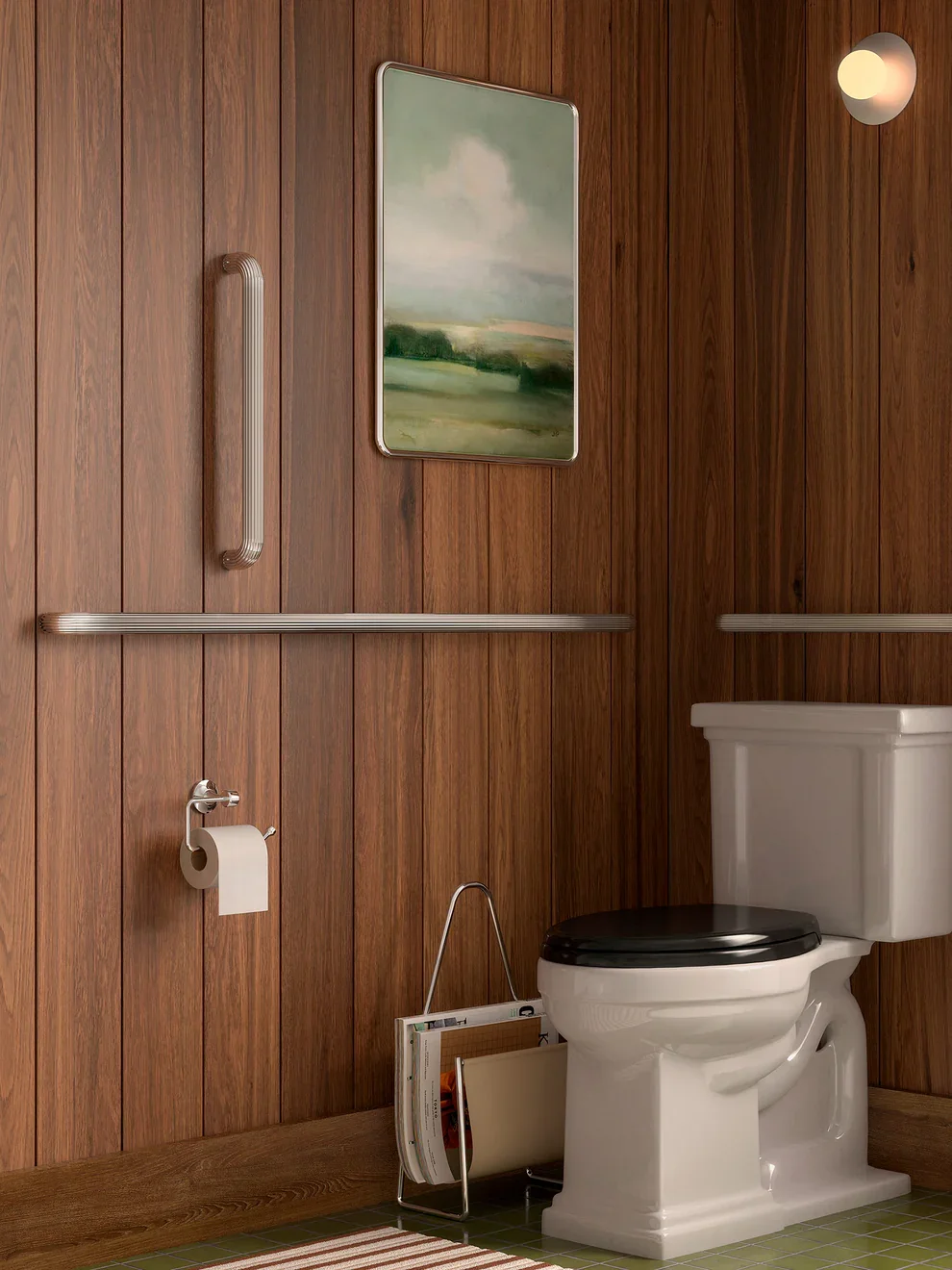
Remsen Designs Grab Bar demonstrates that function and style can live together.
3. Bathroom Entry and Transition Areas
Many falls happen during transitions. Stepping over a shower curb. Turning around in a tight space. Moving from wet flooring to dry flooring.
Strategically placed grab bars near these transition points can provide stability exactly when it's needed most. This is one reason zero-curb showers are so valuable. Eliminating the step removes the hazard before additional support is even required.
The Biggest Installation Mistake Homeowners Make
The number one mistake isn't choosing the wrong grab bar. It's installing it incorrectly.
A grab bar is only as strong as the structure behind it. Grab bars should be anchored into wall framing or other approved structural backing. Simply screwing into drywall—even with heavy-duty anchors—is not sufficient for most applications. A properly installed grab bar should support a person's full body weight if necessary.
If you're remodeling, ask your contractor to install plywood backing throughout the shower and around the toilet area before tile goes up.
This inexpensive upgrade allows grab bars to be added, moved, or upgraded later without opening the wall.
Questions to Ask Your Contractor
Before installation, ask:
What structural backing exists behind this wall?
Are the bars anchored into framing or blocking?
What weight rating does the manufacturer specify?
Can additional backing be installed during the remodel?
Will future grab bar locations be supported?
If your contractor can't clearly answer these questions, keep asking.
How to Make Grab Bars Look Good
The good news is that modern grab bars have improved dramatically.
You no longer need to choose between safety and style.
Match Existing Hardware
The easiest strategy is selecting grab bars that match your other fixtures.
If your bathroom uses:
Brushed brass fixtures, choose brushed brass grab bars.
Matte black fixtures, choose matte black grab bars.
Polished nickel fixtures, choose polished nickel grab bars.
When finishes match, grab bars visually blend into the overall design rather than standing out.
Use Designer Collections
Many premium plumbing manufacturers now offer ADA-compliant grab bars within their standard collections.
This means your towel bars, toilet paper holder, robe hooks, and grab bars can all share the same design language.
Guests often assume they're simply decorative accessories.
Grab Bars That Don't Look Like Grab Bars
If aesthetics are a major concern, several options are worth considering.
Decorative Grab Bars
Brands such as Moen, Delta, and Kohler now offer grab bars designed specifically for residential bathrooms.
Many are nearly indistinguishable from luxury hardware.
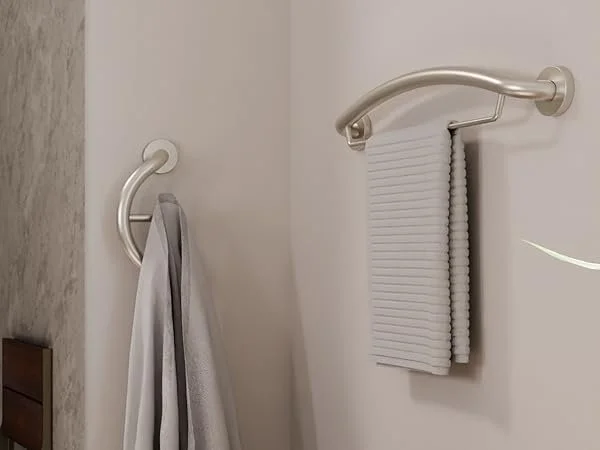
Towel-Bar Grab Bars
These combine a grab bar and towel bar into a single fixture.
They provide support while maintaining a familiar appearance.
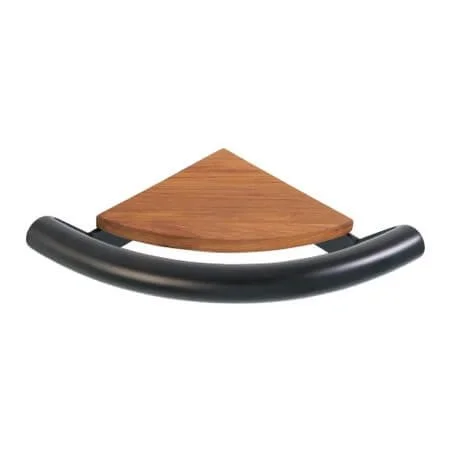
Shelf Grab Bars
Some manufacturers offer wall-mounted shelves engineered to function as grab bars.
At first glance they appear to be simple bathroom storage.
Our Favorite Grab Bar Styles
When evaluating grab bars, we look for three things:
Safety
Durability
Design quality
Some excellent options include:
Kohler grab bars in brushed brass or polished nickel finishes
Rejuvenation-architectural grab bars paired with traditional fixtures
The specific model matters less than choosing something that complements the overall bathroom design.
Future-Proofing Without Advertising Your Age
One of the biggest misconceptions about aging-in-place design is that it should look like aging-in-place design.
The best accessible bathrooms don't announce themselves. Visitors notice beautiful tile, warm lighting, quality fixtures, and thoughtful details. They don't notice the grab bars. They simply experience a bathroom that feels comfortable, intuitive, and easy to use. That's the real goal.
A well-designed grab bar shouldn't make your home feel older.
It should make your home work better.
Final Thoughts
Grab bars are one of the highest-return investments you can make in a bathroom.
Properly placed, correctly installed, and thoughtfully selected, they provide safety without sacrificing style. The secret is treating them like a design feature rather than a medical device.
When done well, the result is a bathroom that looks beautiful today and remains functional for decades to come.
