

Walk-In Showers for Seniors: Safety Features, Design Options & What to Budget
You've probably seen them: white grab bars bolted to beige tile, a plastic shower chair shoved in the corner, a rubber mat curling up at the edges. The kind of bathroom setup that announces, loudly and without apology, that someone needed help.
That's not what aging in place has to be. And if you're reading this, chances are you already suspect there's a better way.
Walk-in showers are one of the most impactful upgrades you can make to a home for aging in place — and when done right, they look like something out of a high-end spa, not a medical supply catalog. This guide will walk you through everything you need to know: the safety features that actually matter, the design choices that preserve the beauty of your home, and the numbers you need to plan your budget.
By the time you finish reading, you'll be able to walk into a conversation with any contractor or designer and hold your own.
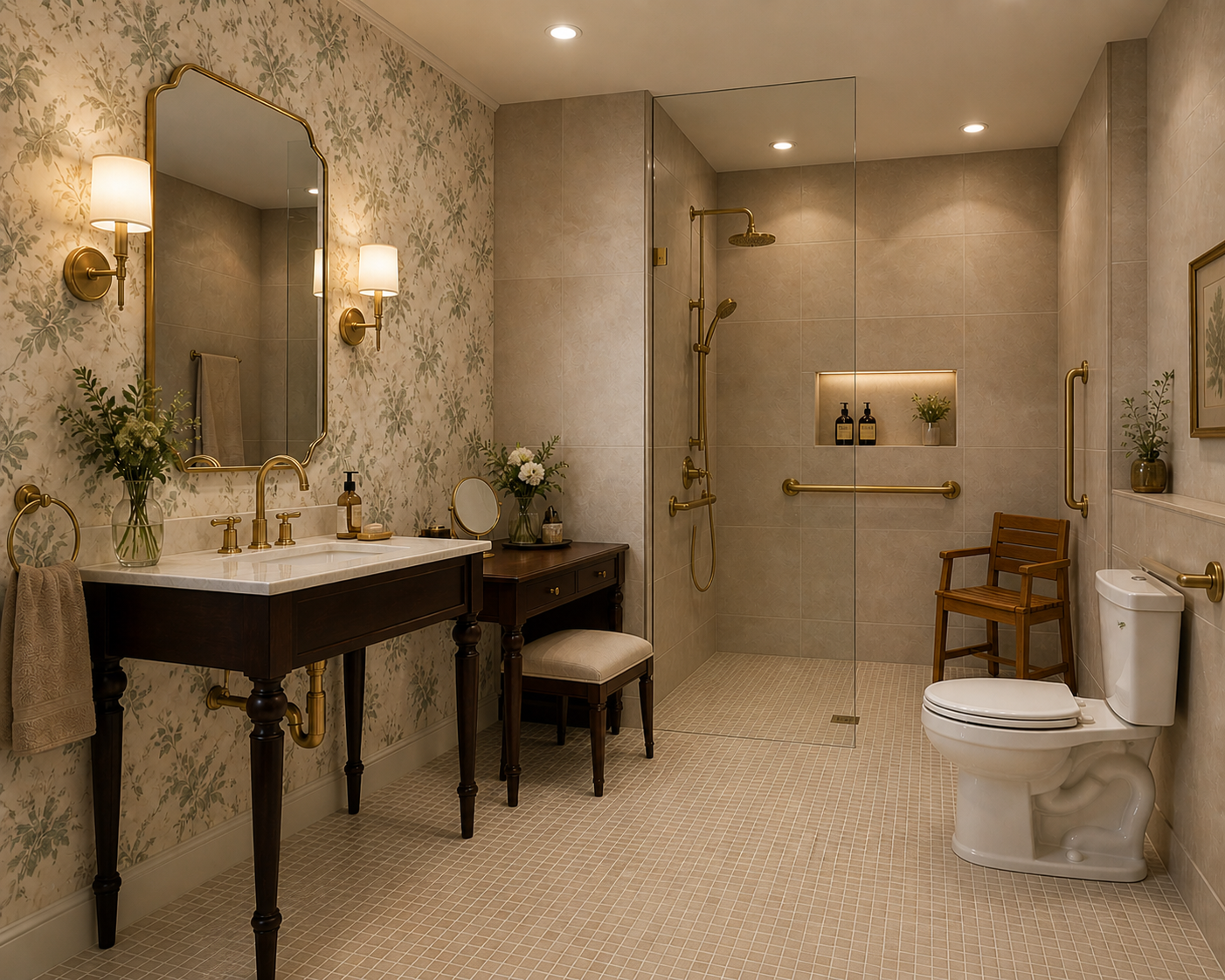
What Makes a Shower "Walk-In"?
The term "walk-in shower" gets used loosely, so let's be precise. In the context of aging in place, there are options. Removing a bath/shower combo is the most important change. Depending on your bathroom, you might opt for a walk-in shower with a small lip. This is a huge improvement over the large step required to get into a bath/shower combo. However, your best option, both in terms of safety and design, is a zero-threshold entry — meaning there is no curb, lip, or step to cross to enter the shower. You walk straight in from the bathroom floor.
This is sometimes called a curbless shower or roll-in shower, and it's the gold standard for accessibility for a very simple reason: curbs are the enemy. They're trip hazards for anyone with reduced leg lift, balance challenges, or vision changes — and those are exactly the kinds of changes that tend to sneak up on us in our 70s, 80s, and beyond.
But here's the thing designers know that most people don't: a zero-threshold shower is also just beautiful. The seamless floor-to-floor transition creates a clean, open, spa-like aesthetic that high-end hotels and luxury homes have been using for decades. It's not an accessibility compromise — it's a design upgrade.
The Safety Features That Actually Matter
Before we get into tile and finishes (and we will — that's the fun part), let's talk about what makes a walk-in shower genuinely safe for aging in place. These are the features worth understanding and asking about.
1. Zero-Threshold Entry
As discussed above, this the best option for true accessibility. The floor of the shower should be flush with — or within ½ inch of — the bathroom floor. To drain properly, the shower floor slopes subtly toward the drain. A skilled tile setter makes this imperceptible.
What to ask your contractor: "How will you handle the transition between the shower floor and the bathroom floor, and what slope will you set for drainage?"
2. Grab Bars (Placed Correctly)
Grab bars save lives. Falls in the bathroom are the leading cause of injury-related hospitalizations among seniors — and the shower is the highest-risk zone. But placement matters enormously, and this is where many remodels get it wrong.
Grab bars should be installed:
Horizontally on the entry wall to assist with stepping in and out
Diagonally (at a 45-degree angle) on the back or side wall for transitioning from standing to seated
Vertically near the shower controls for balance while adjusting water temperature
They must be anchored into wall studs or blocking — not just drywall. A good contractor will install backing (blocking) in the walls during the remodel so bars can be added or repositioned later without opening walls.
What to ask your contractor: "Will you install blocking in the shower walls so we can add or reposition grab bars in the future?
3. Non-Slip Flooring
Wet tile is one of the most dangerous surfaces in any home. For shower floors specifically, you want tile with a Dynamic Coefficient of Friction (DCOF) rating of 0.42 or higher for wet surfaces — that's the industry standard for slip resistance.
Smaller tile with more grout lines naturally provides more texture and grip. Mosaic tile (1"–2" tiles) is a classic choice that also happens to be gorgeous. Large-format tile on shower floors is a trend worth skipping for safety reasons, no matter how sleek it looks.
What to ask your tile contractor: "What is the DCOF rating of this floor tile, and is it rated for wet shower floors?"
4. Handheld Showerhead
A handheld showerhead on an adjustable slide bar is one of the simplest, most affordable accessibility upgrades available — and it benefits everyone in the household. It allows bathing while seated, rinsing without twisting, and cleaning the shower itself with ease.
For aging in place, pair it with a fixed overhead rain shower head for the full spa experience. You get luxury and function.
5. Thermostatic Shower Controls
Burns are a serious risk for seniors, whose skin is more sensitive and whose reaction time to adjust water temperature may be slower. A thermostatic valve lets you preset the maximum water temperature so the water that comes out is always within a safe range, no matter what.
These valves also have a separate on/off control from the temperature control — meaning you can turn the water on and off without it going cold every time. They're a staple in high-end shower design and an excellent accessibility feature wrapped in a beautiful package.
Where Design Meets Function: Making It Feel Like a Spa, Not a Hospital
This is where most aging-in-place guides fall short. They tell you what's safe, but they don't tell you how to make it beautiful. Let's fix that.
Tile Selection: Your Single Biggest Design Decision
Tile sets the entire tone of a shower. Here's how to choose tile that is both safe and stunning:
For shower floors: Choose small-format tile with texture. Some excellent options:
Mosaic marble or natural stone — timeless, slip-resistant, luxurious. Calacatta or Carrara marble mosaics look like they belong in a five-star hotel.
Textured porcelain mosaics — more durable than natural stone, extremely slip-resistant, and available in hundreds of styles that mimic stone, wood, and concrete.
Pebble tile — rounded river stones set in mesh backing. The texture provides excellent grip and a natural, organic look that ages beautifully.
Avoid: large-format tiles (12"×24" and above) on shower floors, highly polished finishes, and glass tile on floors.
For shower walls: You have much more freedom here. Large-format tile on walls is stunning, easy to clean, and reduces grout lines for a sleek look. Consider:
Slab-look porcelain — mimics the look of full marble or stone slabs at a fraction of the cost and without the maintenance.
Subway tile with a twist — classic 3"×6" subway in a herringbone or stacked vertical pattern reads as distinctly modern.
Textured wall tile — 3D tiles or handmade-look ceramics add dimension and interest.
Bookmatched porcelain panels — if budget allows, these large panels create a veined marble effect with virtually no grout lines. Jaw-dropping.
Pro design tip: Use a cohesive but contrasting combination — a textured, matte floor tile paired with a smooth, large-format wall tile. The contrast is visually sophisticated and the matte floor reads as intentional design, not a safety afterthought.
Layout: Designing for Ease Without Sacrificing Flow
The layout of your walk-in shower determines both how safe it is and how spacious it feels. Here's what to prioritize:
Size matters. The minimum for a comfortable walk-in shower is 36"×36", but for aging in place, 36"×48" is better, and a 60"×30" or larger is ideal — especially if a fold-down bench or shower chair will be used. A larger shower is also just more pleasant to use and adds more perceived luxury.
Bench or built-in seat placement. A built-in bench along one wall — tiled to match the rest of the shower — is both functional and elegant. It's not a "disabled person's feature." It's something you'll use every day for shaving, rinsing, or simply enjoying a slow morning. Position it opposite the showerhead so the user isn't sitting directly in the spray path.
Controls on the entry wall. Place shower controls so they can be reached and turned on before stepping into the shower. This means you're not reaching blindly into a cold (or scalding) spray to turn it on. It's an incredibly simple design detail that makes a world of difference.
Open entry, no door. A walk-in shower large enough to have an open entry — no door or curtain required — is the ultimate accessible and luxurious design. Water is contained through strategic layout and a well-positioned linear drain. If the shower footprint doesn't allow for a fully open entry, a frameless glass panel or door is far preferable to a framed door or curtain for both aesthetics and ease of use.
High-End Finishes: The Details That Elevate Everything
The difference between a bathroom that looks "accessible" and one that looks designed often comes down to the metal finishes and fixture choices. Here's where to invest:
Grab bar finish. This is the big one. Grab bars in a brushed nickel, matte black, polished chrome, or unlacquered brass finish — matched to your faucet and showerhead — disappear into the design. They look intentional. Contrast this with the white or chrome institutional grab bar that screams "medical equipment," and the difference is profound. Brands like Moen, Delta, and Kohler all offer grab bars in designer finishes that match their full fixture lines.
Showerhead and controls. A rain shower head paired with a handheld wand in a matching finish (matte black is particularly popular right now) looks luxurious and provides exceptional function. Thermostatic controls with a clean plate design add a spa-hotel quality.
Frameless glass. If your shower has an enclosure, go frameless. A frameless glass door or panel with a minimal hardware kit reads as upscale and keeps the visual weight light — making the bathroom feel larger.
Lighting. In-shower lighting (recessed, waterproof fixtures) adds drama and safety. A well-lit shower is a safe shower — you can see exactly where you're stepping.
Stylish Shower Chairs: You Don't Have to Compromise
Let's address the chair in the room.
Shower chairs have a reputation problem. The image most people have is a white plastic chair with aluminum legs — the kind found in nursing home showers. That image is outdated, and it has no business being in your home.
The shower chair market has evolved dramatically, and today's options are genuinely beautiful. Here's what to know:
Built-In Tiled Bench (The Premium Option)
If budget allows, a built-in shower bench is the gold standard. Tiled in the same material as your shower walls or floor, it looks like an intentional architectural feature — because it is. No legs, no plastic, no folding. Just a clean, permanent, beautiful seat that's part of the shower itself.
For aging in place, this is the best investment: it's always there, always stable, and it looks like it belongs.
Typical cost: $500–$1,500 to add during a remodel, depending on size and tile.
Fold-Down Teak or Wood-Look Bench
Teak wood is naturally water-resistant and has been used in luxury steam rooms and spas for decades. A fold-down teak bench mounted to the shower wall provides a seat when needed and folds flat against the wall when not in use — keeping the shower open and uncluttered.
The warm wood tone against tile is a designer-approved combination. These are beautiful, functional, and unmistakably intentional. Brands like Aquateak and Redi Teak offer hospital-grade wall mounting with spa-quality materials.
Typical cost: $150–$400 for the bench, plus installation.
Freestanding Designer Shower Stools
For those who want flexibility — or who rent their home — freestanding shower stools have come a long way. Look for:
Teak shower stools — classic, beautiful, naturally water-resistant. The warm tone of teak complements virtually any tile palette.
Aluminum with teak seat — the lightness of aluminum with the warmth of wood. Very stable, very sleek.
Resin or composite "stone look" stools — these mimic the look of stone or concrete and are virtually indestructible in wet environments.
What to avoid: chrome and plastic. They age poorly, look institutional, and are harder to clean.
Trusted brands to explore: Aquateak, Teakworks4u, Moen (their shower seats), and Delta's accessible bath collection all offer options that blend safety specs with real design intent.
Key features to look for in any shower chair or stool:
Non-slip rubber feet
Weight capacity appropriate for the user (most quality chairs support 300–400 lbs)
Ease of cleaning (avoid cushions; tile, teak, and resin are your friends)
Stability — no wobble
What Does a Walk-In Shower Remodel Cost?
Budget ranges vary significantly by region, scope, and material choices. Here's a realistic framework for the DFW / North Texas area:
Basic conversion (existing space, standard tile, basic fixtures)$5,000 – $10,000
Mid-range remodel (new layout, quality tile, semi-frameless glass)$10,000 – $20,000
High-end / luxury remodel (custom tile, frameless glass, thermostatic system, built-in bench) $20,000 – $40,000+
These ranges assume you're working within an existing bathroom footprint. Moving walls, relocating plumbing, or expanding the bathroom footprint will add cost.
Questions to Ask Before You Hire Anyone
You now know enough to have a real conversation. Here are the questions that separate experienced accessible-design contractors from those who are guessing:
Have you completed aging-in-place or universal design projects before? Can I see photos?
Will you install backing/blocking in the walls for future grab bar placement?
What waterproofing system do you use for curbless shower floors?
What is the DCOF rating of the floor tile you're recommending?
How will you handle the floor transition between the shower and bathroom to ensure there's no trip hazard?
Are you familiar with thermostatic shower valves, and do you work with plumbers who install them?
Do you have a designer on your team, or can you recommend one who specializes in universal design?
The Bottom Line
A walk-in shower for aging in place isn't a concession to getting older. It's a decision to design your home thoughtfully — for how you live now and for how you want to live for decades to come.
The best walk-in showers are indistinguishable from luxury spa design. The tile is beautiful, the fixtures are intentional, the grab bars match the faucet, and the shower chair looks like it belongs in a boutique hotel. Nothing announces limitation. Everything announces taste.
You deserve a bathroom that feels like yours — beautiful, safe, and built to last. Now you know exactly what to ask for.
Have questions about planning an aging-in-place bathroom remodel in the Grapevine or DFW area? We'd love to help you think it through. Contact us or explore more guides in our resource library.
