

The single most powerful design tool in any room — and one of the most important for aging in place.
Good Lighting Does Everything
Interior designers will tell you that lighting is the most transformative element in any room. The right lighting makes a space feel larger, warmer, more luxurious, more alive. The wrong lighting makes even a beautifully furnished room feel flat, cold, or uninviting.
For older adults, lighting does something else too: it directly affects safety, comfort, and the ability to navigate your home with confidence. As eyes age, they require more light to process the same level of detail. Contrast sensitivity decreases. Glare becomes more problematic. Recovery time from moving between bright and dark spaces slows.
The solution isn't simply to add more light. It's to add the right light, in the right layers, in the right places.
The Three Layers of Lighting
Ambient Lighting: The Foundation
Ambient light is your room's general illumination — the base layer that fills the space and allows you to move around safely. In most homes, this is provided by overhead fixtures: recessed cans, flush mounts, chandeliers.
For aging in place, ambient lighting should be:
Bright enough to illuminate the full space without dark corners or shadow pools
Warm in color temperature (2700K–3000K) to feel comfortable and reduce glare
Controllable with dimmers so you can modulate brightness by time of day and activity
Placed to avoid casting shadows downward on faces and work surfaces
Task Lighting: Where You Need to See Clearly
Task lighting is focused illumination for specific activities: reading, cooking, grooming, working. This is where both function and luxury live.
In the bathroom, task lighting at the vanity is critical. Overhead lighting alone casts shadows on the face. Side-mounted sconces or Hollywood-style mirror lighting eliminates shadows and provides even, flattering illumination for grooming — whether you're standing or seated.
In the kitchen, under-cabinet lighting illuminates the counter where you're cutting, measuring, and reading labels. In the bedroom, a well-positioned bedside lamp or reading light means you can read or check your phone without getting up or adjusting the whole room.
Accent and Night Lighting: The Finishing Touch
Accent lighting adds depth, drama, and beauty. Cove lighting, under-cabinet lighting in a kitchen that provides both task and ambient warmth, lighted toe kicks, and decorative pendants all fall into this category.
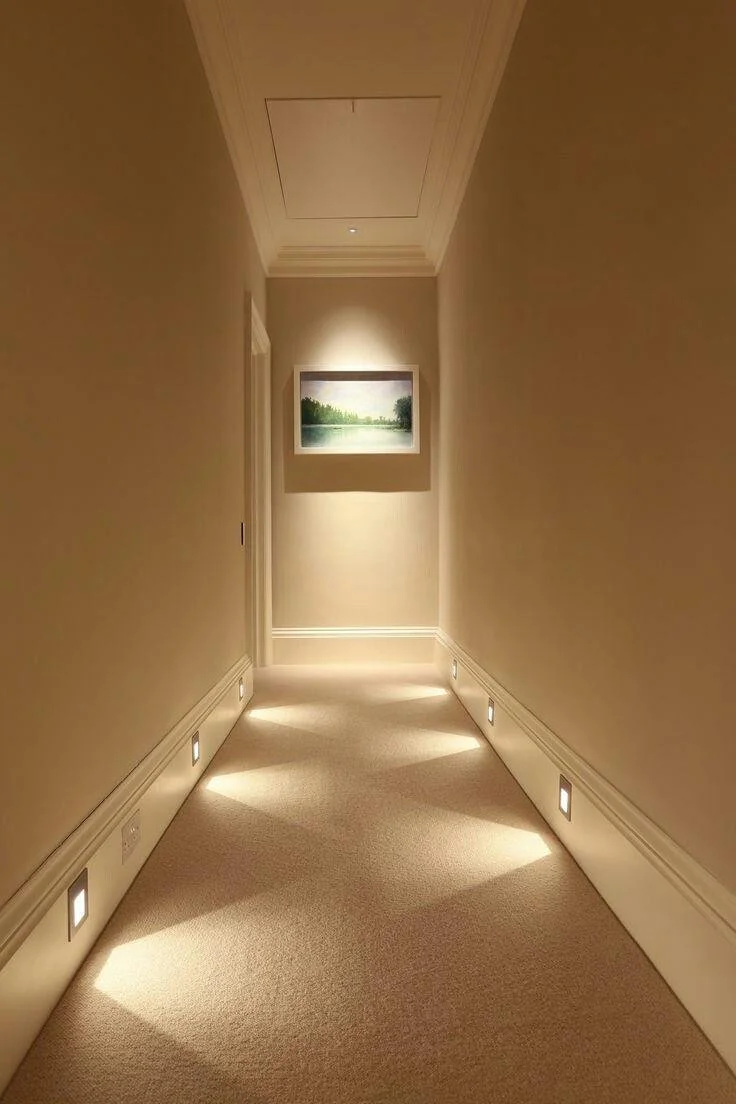
Night lighting is the safety layer that often gets overlooked. The path from bedroom to bathroom at 2 a.m. is one of the highest-risk moments in the home. Motion-activated night lights, lighted outlet covers, or low-level LED strip lighting along baseboards can illuminate this path without waking anyone up — and reduce fall risk significantly.
Light Switches and Controls
The switch itself is part of the safety equation. Considerations:
Rocker switches are easier to operate than small toggle switches, especially with reduced hand strength
Switches should be consistent in location — at a predictable height (42–48 inches from the floor) and at both ends of hallways and stairs
Dimmer switches allow one fixture to serve multiple purposes across the day
Smart switches and home automation allow voice-activated or schedule-based lighting — lights that come on automatically at dusk, or at a set time in the morning, are genuinely helpful
Illuminated switch plates glow faintly in the dark, making them easy to locate at night
Lighting is one of the few home modifications where the right choice looks better, feels better, and works better all at once. There's no compromise here.
The Bathroom: A Special Case
Bathrooms deserve particular attention because so much happens there — and so many falls happen there. In addition to good vanity lighting, consider:
A lighted toe kick under the vanity that provides gentle night illumination
A backlit mirror that provides even vanity light and a beautiful design statement
Recessed lighting in a walk-in shower (waterproof, appropriate fixtures) so the interior is well-lit
No bare bulbs or fixtures that create glare at eye level
Color Temperature: Warm vs. Cool
Color temperature — measured in Kelvin — affects both how a space feels and how well older eyes can see. As a general guide:
2700K: Very warm, incandescent-like. Beautiful for living rooms and bedrooms.
3000K: Warm white. A good all-purpose choice for bathrooms and kitchens that feel welcoming.
3500K–4000K: Neutral to cool white. Good for task areas, but can feel clinical in living spaces.
5000K+: Daylight. Good for workshops or specific task areas; too harsh for most home interiors.
For aging in place, warm-to-neutral temperatures (2700K–3000K) in living areas and 3000K in bathrooms and kitchens strike the best balance of comfort and clarity.
What a Layered Lighting Plan Looks Like
A well-designed room has all three layers working together. In a master bathroom, for example: recessed ambient lighting on a dimmer provides the base. Side-mounted sconces at the vanity provide task light. A lighted toe kick or night light provides the safety layer after dark. A decorative pendant or chandelier (yes, even in bathrooms!) provides the accent layer.
Together, they create a room that functions perfectly and looks magazine-worthy.
Age in Place North Texas designs beautiful, functional lighting plans for clients throughout the DFW area. Good lighting is one of our favorite things to get right.
