

The Handheld Showerhead Guide: Hose Length, Head Position, and Why This Is One of the Best Investments You Can Make
Simple, beautiful, and one of the most impactful accessibility upgrades in any bathroom.
The Most Underrated Upgrade in the Bathroom
If there is one aging-in-place bathroom modification that offers the highest return for the lowest investment, it is switching to a quality handheld showerhead. The cost is minimal. The installation is simple. And the difference it makes — for safety, comfort, and independence — is significant.
Whether you are fully mobile or use a shower chair or bench, a handheld showerhead gives you control. You can rinse exactly where you need to. You can wash your hair seated. You can direct warm water to a sore knee or hip. You don't have to contort or reach or get your face wet to rinse your legs.
And the good news for anyone who cares about aesthetics: handheld showerheads today are genuinely beautiful. Rain shower heads, sleek wall-mounted systems, and sophisticated dual-function fixtures are available in every finish imaginable.
The Hose: Length Matters More Than You'd Think
The hose connecting your handheld showerhead to its water source is one of the most important — and most overlooked — specifications. Standard hoses run 60 inches, which sounds adequate until you're seated on a shower bench and realize you can't reach the lower half of your body comfortably.
60 inches (5 feet): adequate for most standing use, but can feel limiting when seated
72 inches (6 feet): the sweet spot for most users — long enough for seated use without excess tangling
84–96 inches (7–8 feet): ideal for larger shower spaces or for users with significant reach limitations
We generally recommend a minimum of 72 inches for any client who anticipates using the shower seated at any point. The extra length costs almost nothing and eliminates a source of daily frustration.
Look for stainless steel hoses — they're more flexible, more durable, and much more attractive than the chrome plastic braided hoses common on budget fixtures.
Head Position: The Sliding Bar
A fixed bracket for a handheld showerhead works, but a sliding bar — also called a slide bar or glide bar — is transformative. It allows the head to be positioned at any height along a vertical bar, so a taller person standing and a shorter person seated can both find the ideal position.
Slide bars typically run 24–36 inches in length and mount to the shower wall. They look clean, modern, and purposeful — not medical. In brushed nickel, matte black, or polished chrome, a slide bar is a design detail that reads as intention, not accommodation.
A slide bar and a quality handheld showerhead is one of the first things we recommend to almost every client. The cost is usually under $200. The impact is immediate.
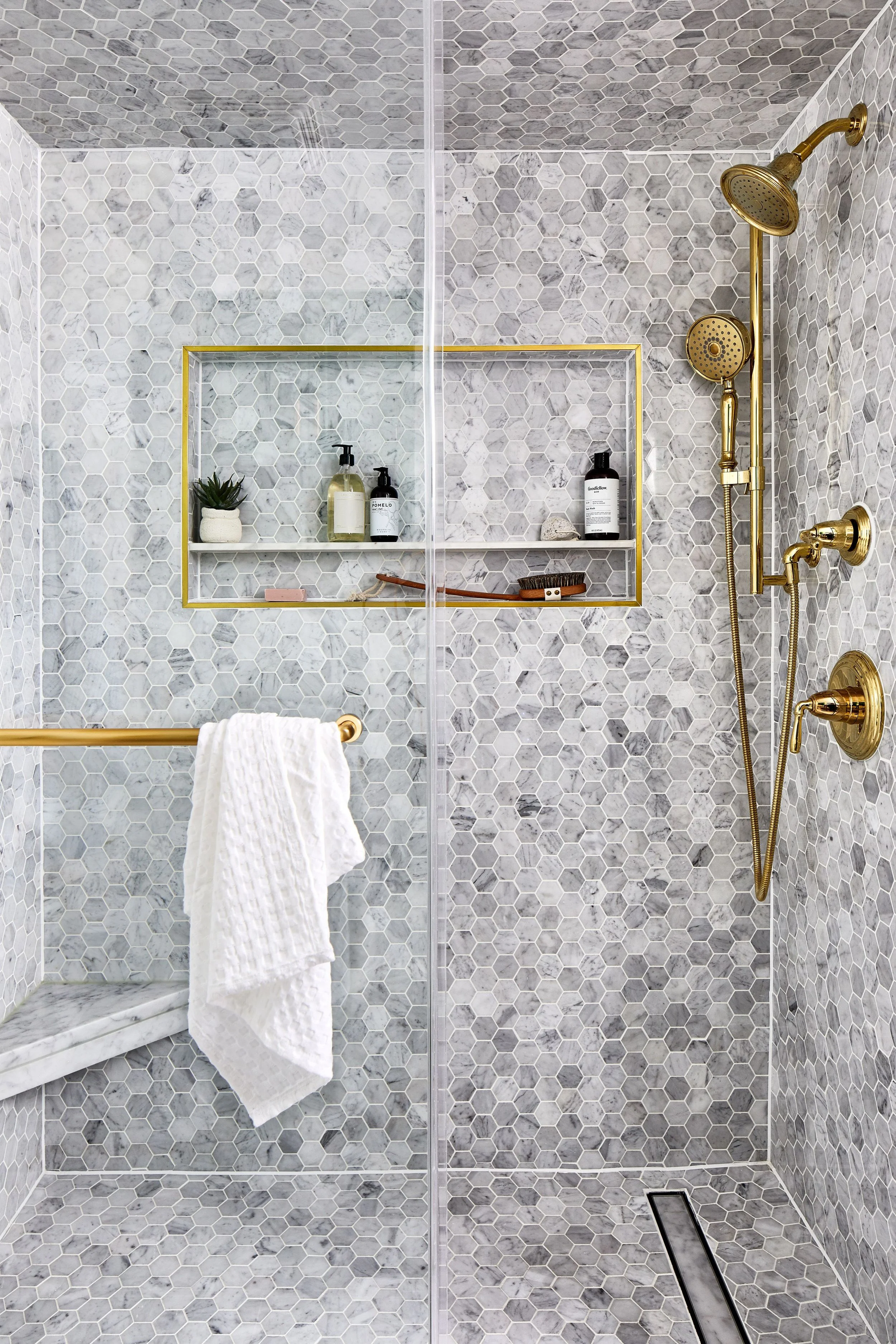
Hot/Cold Handles: Ergonomics and Safety
The handle configuration on your shower valve matters more as hand strength and dexterity change. Key considerations:
Single-Lever vs. Two-Handle Controls
A single-lever thermostatic valve is far easier to operate than separate hot and cold knobs. You turn one handle to activate water and a separate one to set temperature — or in simpler single-handle systems, one lever does both. For anyone with limited grip strength or arthritis, this is a meaningful improvement over round knobs that require twisting.
Thermostatic Controls
A thermostatic shower valve maintains a preset water temperature even if someone flushes a toilet or runs the dishwasher. This prevents scalding — a real safety concern, particularly for older adults who may have reduced temperature sensitivity. Thermostatic systems are available in beautiful designer configurations and are a worthwhile investment for any bathroom remodel.
Anti-Scald Devices
Even without a thermostatic valve, an anti-scald device can be added to your existing shower to limit maximum water temperature. These are typically installed by a plumber and are inexpensive relative to the protection they provide.
Lever Handles
If your shower currently has round knobs, switching to lever-style handles is one of the easiest and most impactful upgrades for hand mobility. Levers can be operated with an open palm, a wrist, or even a forearm — no grip required.
Aesthetic Considerations
The era of the ugly grab-handle showerhead is over. Today's handheld fixtures include:
Matte black systems with rain and handheld combination heads
Polished nickel with a vintage-modern silhouette
Brushed brass for a warm, contemporary look
Multi-function heads with massage, wide spray, and focused stream settings
When specifying a showerhead for a client, we choose the fixture the way we'd choose any piece of hardware in the home: it should feel intentional, beautiful, and cohesive with the rest of the space.
What to Ask For
When working with a plumber or purchasing a handheld showerhead system, ask for:
A hose of at least 72 inches in stainless steel
A slide bar for height adjustment
A lever-style or push-button activation
A thermostatic valve or anti-scald device
A finish that coordinates with your existing or planned hardware
Age in Place North Texas helps DFW homeowners specify and install beautiful, accessible bathroom fixtures. We'd love to help you get it right.
